ABOUT THIS COURSE
This course takes a serious approach to a light-hearted topic.
It works through a series of examples of bullshit to explain their origin, their use and abuse, and how they can be replaced with alternatives that communicate better.
It starts by looking at the history of bullshit, why people do it, and how dangerous it can be.
Working through examples in different business contexts helps us to understand how to deal with bullshit.
The course finishes with advice on dealing with bullshitters, and techniques for removing it from your business.
Who it is aimed at:
Anyone who hates bullshit
All those wanting to remove bullshit from business
Anyone interested in clear communication
How it works:
4 modules:
What is bullshit, why people do it, how dangerous it is
10 examples of internal bullshit
10 examples of external bullshit
Dealing with bullshitters, removing it from business
Video = 30-40 minutes per module
4 hours for the whole course
Or just dip in
What you get out of it:
Complete confidence in how to express things
A suite of ways to deal with bullshitters
A lot of laughs
KEVIN DUNCAN

Kevin is a business adviser, marketing expert, motivational speaker and author.
He is the UK’s best selling business author. He has written over 20 books, which have sold over 250,000 copies. They have been voted Telegraph Business Club Book of the Week, WHSmith Book of the Month, Foyles Book of the Month, nominated for CMI Management Book of the Year, and translated into over a dozen languages.
After 20 years in advertising and direct marketing, he has spent the last 20 years as an independent troubleshooter, advising companies on how to improve.
In agencies, he worked with over 400 clients, deployed £600m of funds on more than 200 brands, oversaw over 1,000 projects, and won 35 awards for creativity and effectiveness.
As Expert Advice, Kevin has completed over 800 jobs for 180 clients, including Dentsu, Design Bridge, Discovery Channel, EE, Facebook, The Guardian, Havas, Hearts & Science, Initiative, Iris, JLL, JWT, London School of Economics, M&C Saatchi, Metro, Mediacom, Mindshare, Moonpig, News UK, Ogilvy, Publicis, RBS, Royal Mail, Saatchi & Saatchi, Strutt & Parker, UM, and the World Federation of Advertisers.
EXAMPLE CONTENT
.
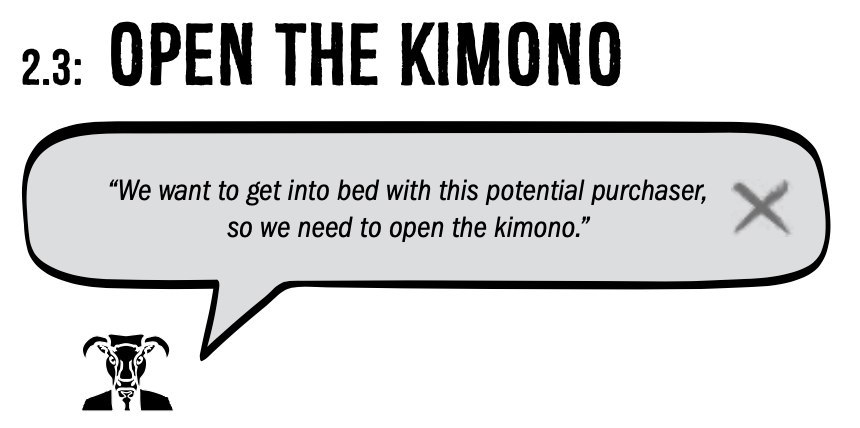
This is a blatantly sexist, and possibly racist, phrase that means to reveal the inner workings of a company or project in order to secure investment or sell the whole company. It probably stems from the rash of Japanese acquisitions of US companies in the ’80s, especially in software. The sexual metaphor suggests revealing enough flesh before consummating the deal.
.
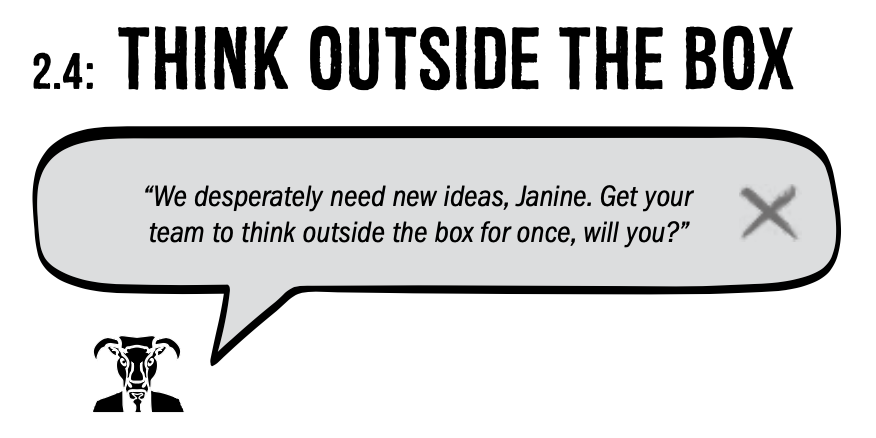
This phrase comes from the nine-dot matrix (or ‘Gottschaldt figurine’), which challenges the solver to join all nine dots with four lines without removing the pen from the paper. The brain perceives the dots as a box, but the puzzle can only be solved by drawing the lines outside the apparent box. In other words, unless you ‘think outside the box’ you can’t solve the problem. There is also a theory that the box in question is an advertising hoarding and that the ad industry adopted the phrase in the 1990s.
.
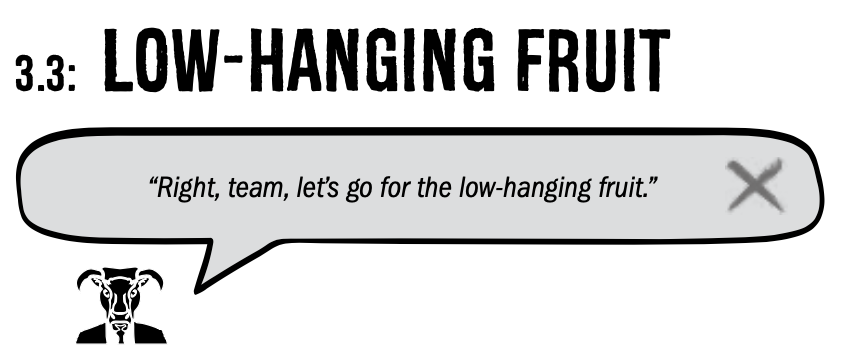
‘Fruit low hung’ or ‘fruit hanging low’ have been part of the English language since at least the 17th century. However, the precise term low-hanging fruit was probably first used in an article in The Guardian newspaper in 1968. It refers to the easiest and simplest thing to do in order to achieve success or benefit in some way (sometimes called a quick fix).
.
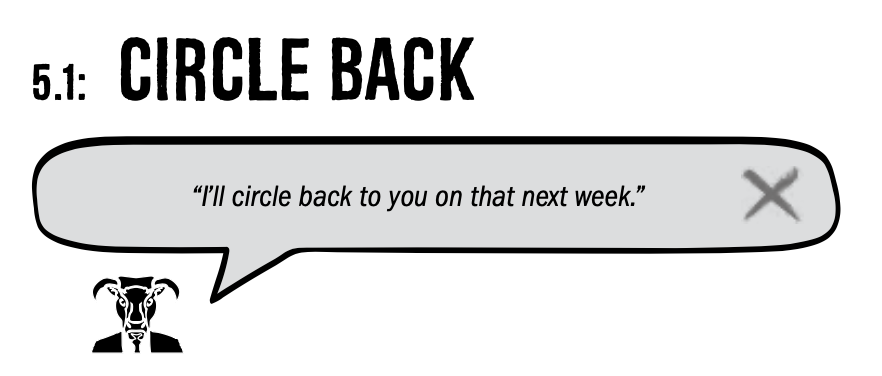
In surveys conducted by this author, this is one of the most consistently hated phrases used in business. It has a bewildering array of meanings, including to discuss it later, to report back after finding out more, and to return to a point in the same conversation or meeting. Its origin is unclear but is probably no more complex than coming back to the same place, having gone around in circles.
.
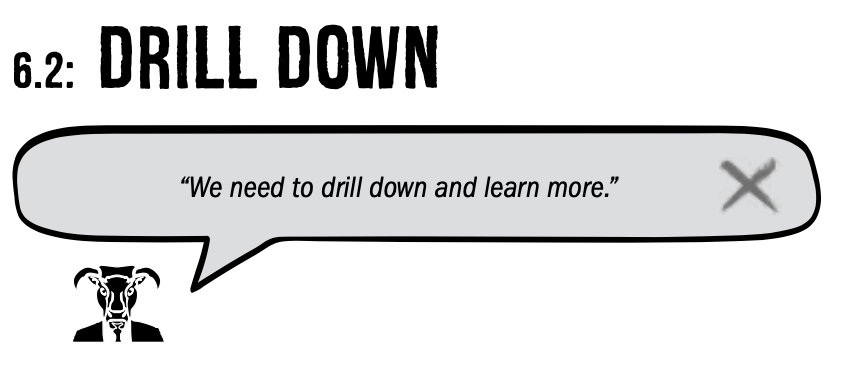
The origin of this word pairing is no more complicated that it sounds. It comes from mining or oil extraction, and simply means that the further you drill down, the more you are likely to discover. In business, it is a request to move from broad summary information to specific detail.
.
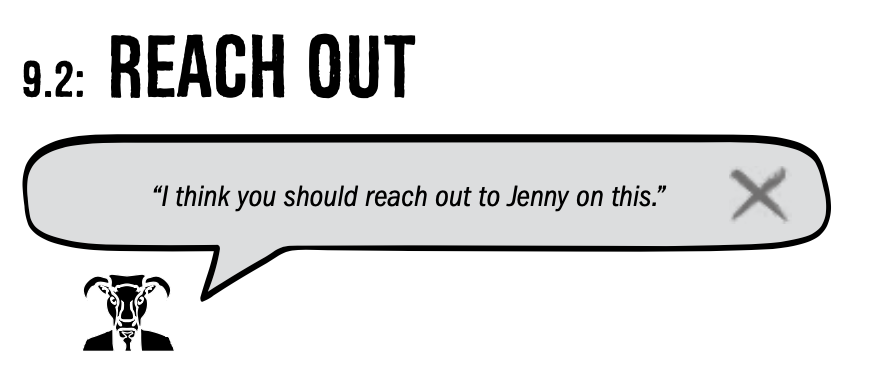
The first recorded version of this phrase is in a 1966 Four Tops song, Reach Out (I’ll be there). It then appeared in an ad campaign for the US phone company AT&T at the end of the sixties. The implication is that reaching out has an element of vulnerability and softness to it, in which the recipient of the contact can add an emotional, or even spiritual, component to proceedings.
COURSE CONTENT
Other courses for you .....
Let’s keep in touch
Subscribe to the mailing list and receive the latest updates